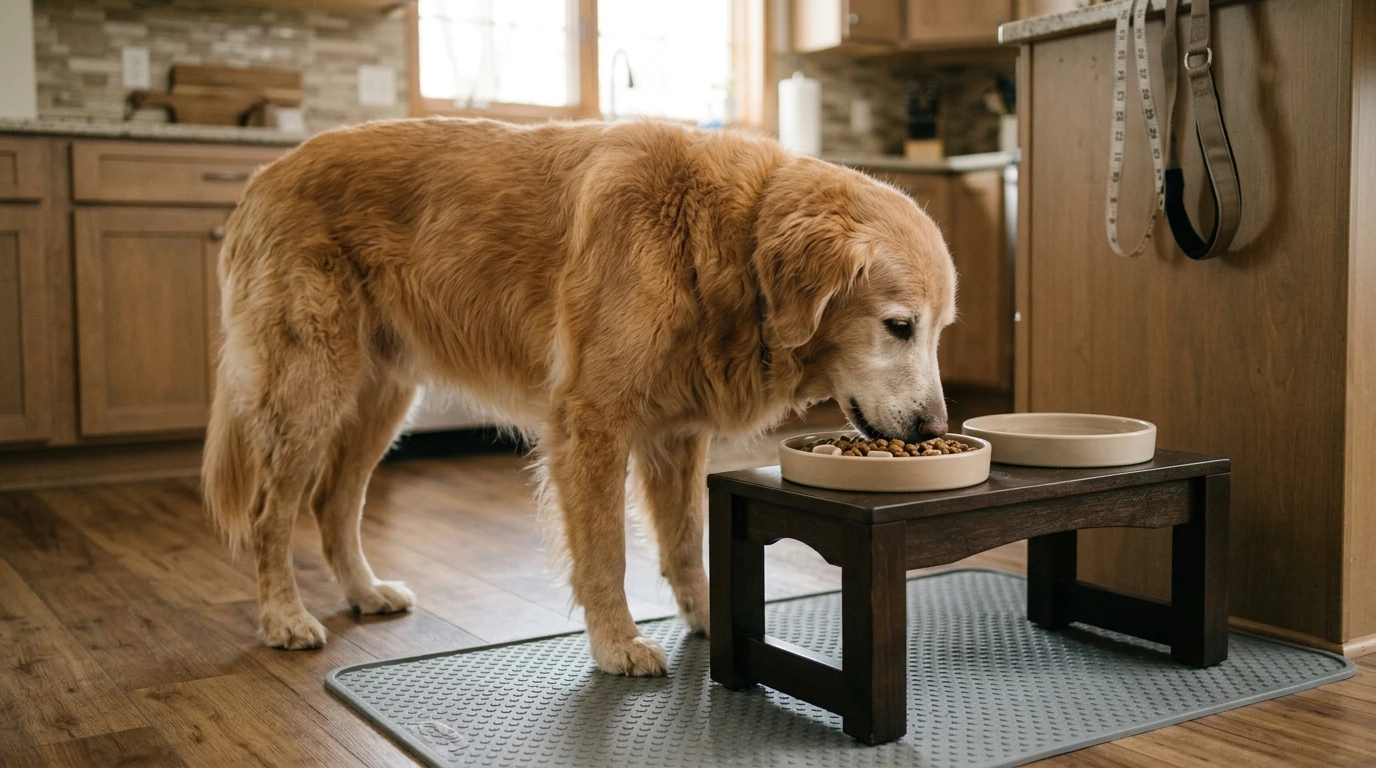
Sometimes—depending on the dog. Many veterinarians see elevated bowls as a helpful option for large-breed dogs that struggle to comfortably reach the floor due to height, neck stiffness, arthritis, shoulder issues, or post-surgery mobility limits. By bringing the food and water closer to a natural standing posture, an elevated setup can reduce strain and make mealtimes easier to manage.
That said, elevated bowls aren’t automatically “better” for every large dog. A healthy, athletic adult dog with no mobility concerns may do just fine with a standard floor-level bowl. The best choice is the one that keeps your dog eating and drinking comfortably, safely, and without making symptoms worse.
Vets commonly suggest trying an elevated feeder when a large dog shows signs of discomfort while eating—such as widening their stance, hesitating to bend, repeatedly stepping back from the bowl, or coughing/gagging during meals. They can also be useful for senior dogs with joint pain and for dogs recovering from orthopedic procedures where bending is difficult.
Proper height matters: the bowl should sit roughly at the dog’s lower chest level so they can eat without hunching or stretching upward. If it’s too high, it can force an awkward neck angle; too low, and it won’t relieve the strain you’re trying to fix.
Some owners worry about bloat (GDV) in deep-chested breeds. Research has been mixed over the years, and recommendations vary by veterinarian based on breed risk, individual history, and how the dog eats (fast gulping vs. calm eating). If your dog is at higher GDV risk, your vet may prioritize slow-feeding strategies and careful monitoring regardless of bowl height.
Start with your dog’s comfort and medical history, then test an elevated bowl for a week or two. Watch posture, swallowing, and whether mealtimes look calmer. For a deeper breakdown of benefits, risks, and picking the right height, visit the full guide on elevated bowls for large-size dogs.
For most large dogs, a good target is bowl height around the lower chest so your dog can eat with a neutral neck and minimal bending. If your dog has arthritis or a neck/back condition, your veterinarian may recommend a slightly different height for comfort.








Leave a comment