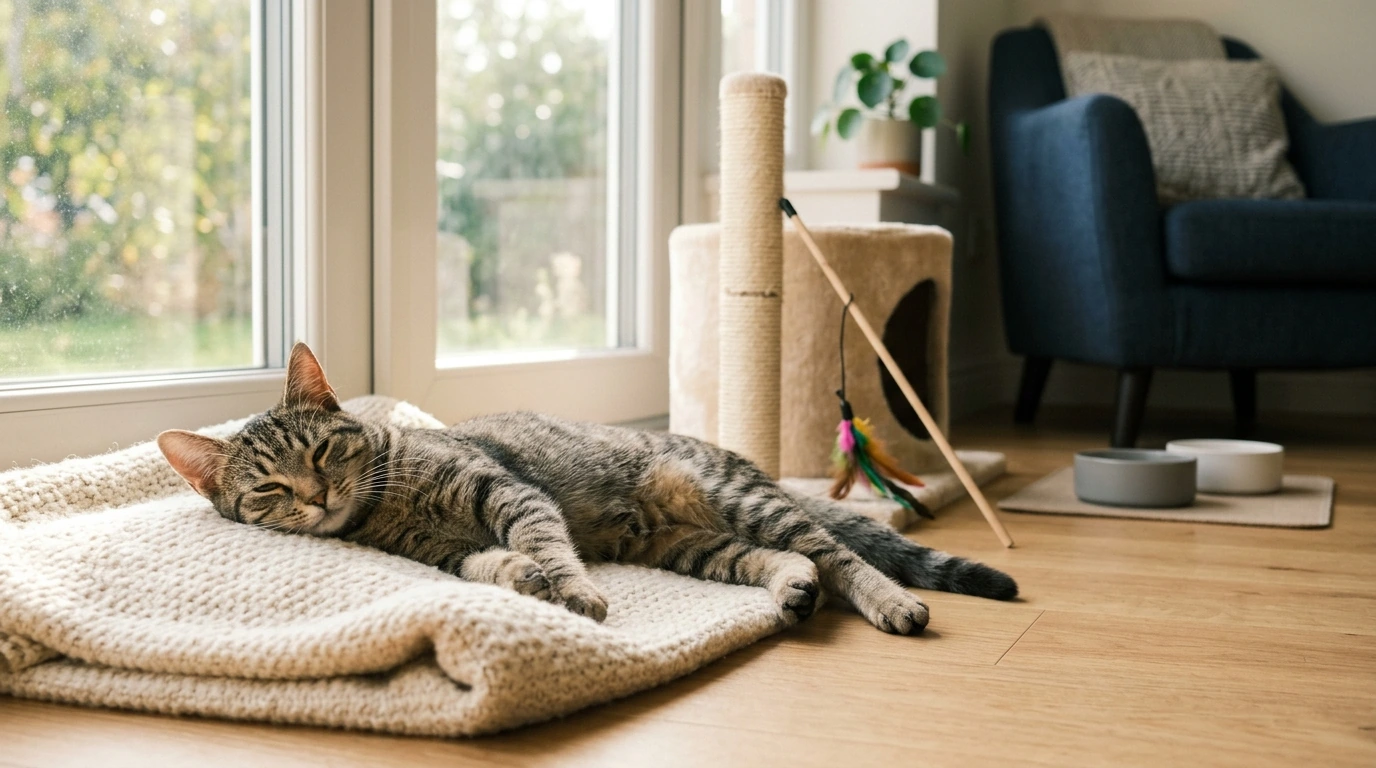
A newly adopted cat is usually happy when they feel safe, comfortable, and in control of their space. Because settling in can take days to weeks, look for a pattern of relaxed behaviors rather than a single “perfect” sign on day one.
Happy, comfortable cats tend to show a loose posture: tail carried softly (not puffed), ears mostly forward or gently swiveling, and slow blinks when you speak to them. Stretching out on their side, grooming calmly, or kneading blankets are also common “all is well” signals.
As your cat warms up, they’ll start exploring rooms, sniffing corners, and checking out windows or cat trees. A good sign is when they develop predictable routines—using the litter box consistently, eating at regular times, and choosing favorite resting spots.
Some cats show happiness by seeking attention: rubbing against your legs, head-butting, purring during petting, or following you from room to room. Others are happiest nearby but not touched; simply choosing to share the same space, napping within view, or greeting you at a distance still counts as growing trust.
Play is a strong indicator that stress is dropping. Short bursts of chasing, stalking toys, or batting at wand toys suggest they’re feeling secure. A steady appetite (not frantic or absent) and deeper, more relaxed sleep—especially out in the open—are also positive signs.
Hiding is normal early on, but contact a veterinarian if you notice persistent refusal to eat, diarrhea or vomiting, straining in the litter box, extreme lethargy, or ongoing fear that doesn’t improve. For a deeper checklist of behaviors and timelines, visit the full guide on how to know if a newly adopted cat is happy.
Many cats show noticeable comfort within 1–3 weeks, but full confidence can take a couple of months. Shy cats often need more time and a smaller starter room to build security.











Leave a comment