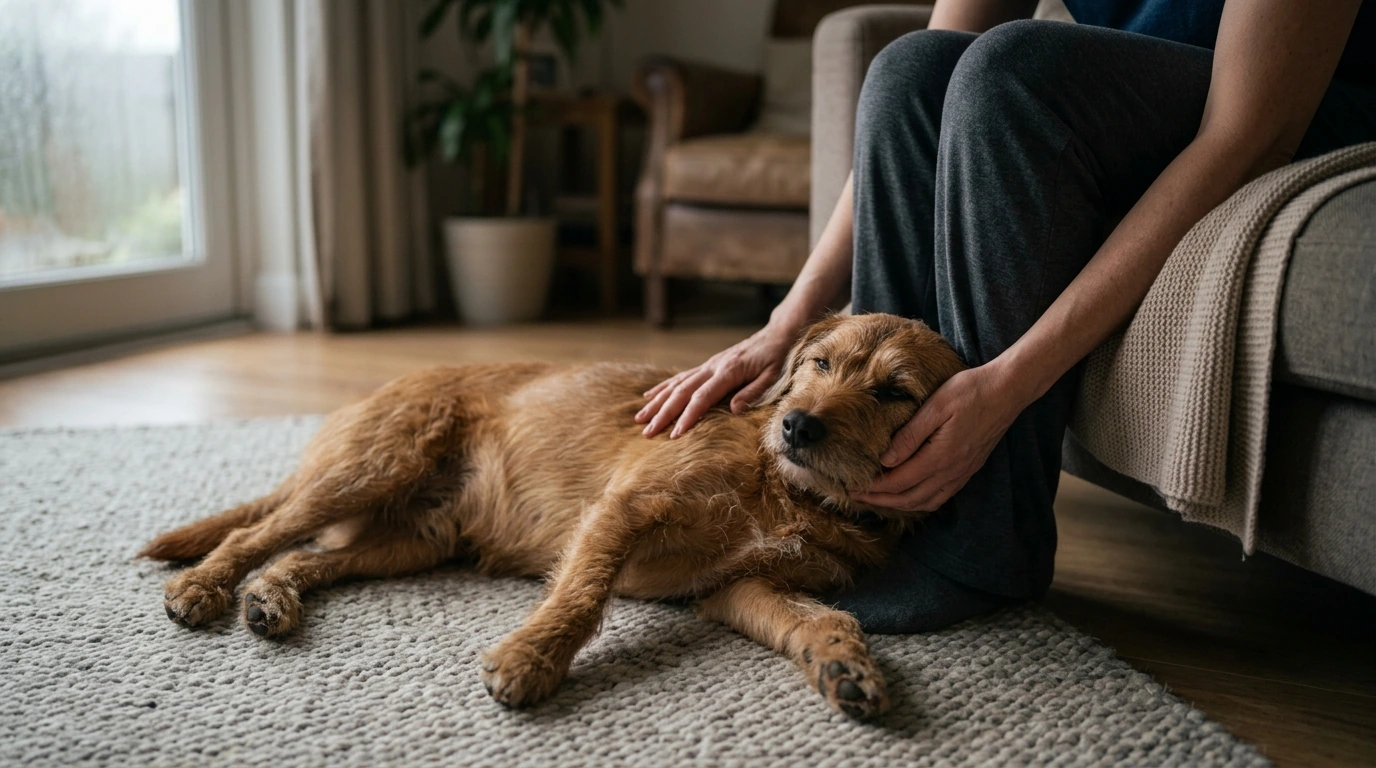
The best places to pet a dog to help them relax are areas that feel safe, predictable, and easy for the dog to tolerate: the chest, the side of the neck/shoulders, the back (along the spine, not pressing down), and slow strokes along the ribs. Use gentle, steady pressure with a calm tempo—think long, smooth passes instead of quick pats.
Start by letting your dog choose closeness. If they lean in, soften their eyes, or exhale, continue. If they turn their head away, lick their lips repeatedly, tense up, or step back, pause and give space.
Chest: Many dogs find slow rubs on the chest grounding, especially if you keep your hand low and movements predictable.
Shoulders and base of the neck: Gentle strokes here can feel reassuring without being intrusive. Stay on the sides rather than reaching over the top of the head.
Along the back: Use flat-hand strokes from shoulders toward the mid-back. Avoid heavy pressure and avoid tapping or drumming motions.
Ribs/side: If your dog is comfortable, slow strokes along the side can help them settle, particularly when paired with a quiet environment.
Skip head pats, hugging, face handling, tail grabbing, and paw touching when your dog is anxious. These can feel trapping or startling and may increase tension. If your dog is already on edge (like during fireworks or thunderstorms), keep contact minimal and calm.
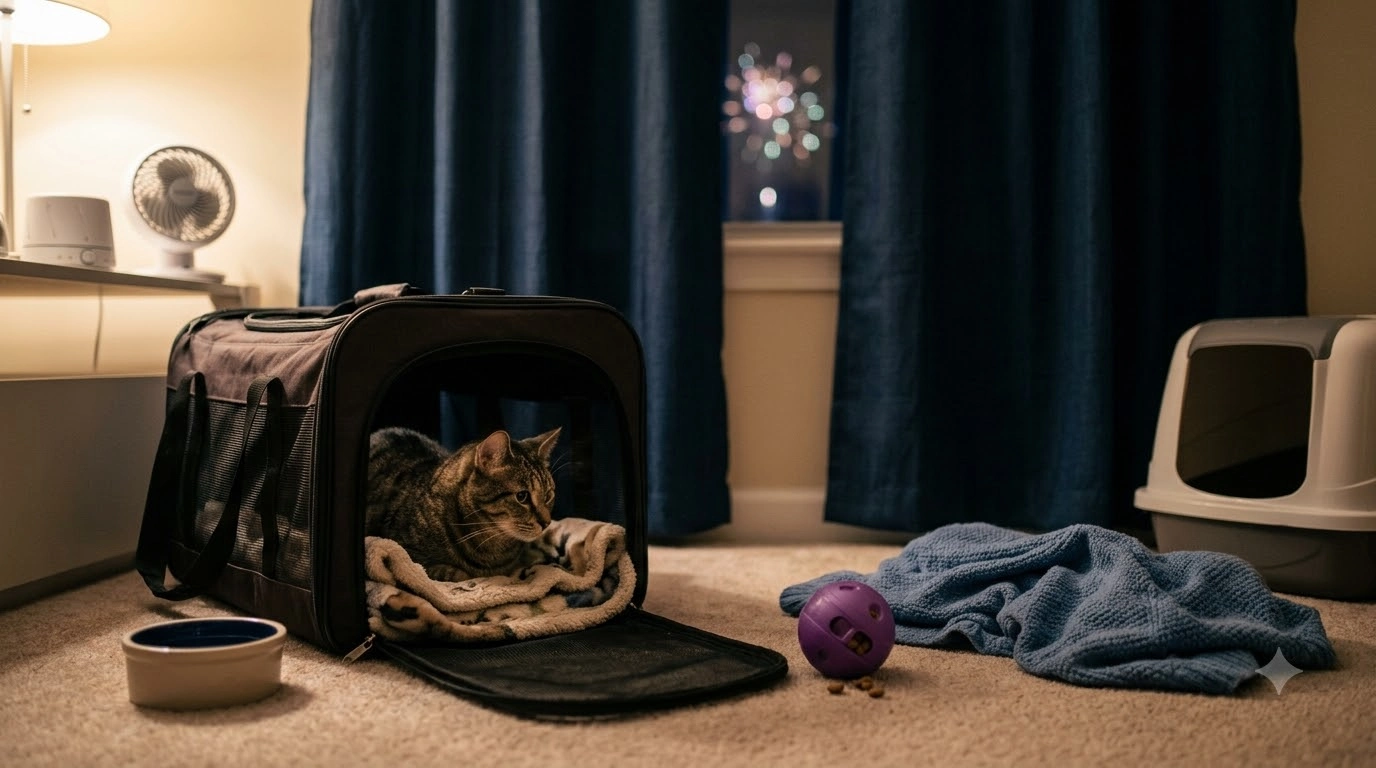
Lower your voice, move slowly, and pet in the direction of the fur. If your dog is reacting to loud noises, combine soothing touch with a calmer setup—dim lights, reduce sound, and offer a safe space. For a step-by-step calming checklist during storms, see this guide on calming pets fast during thunderstorm anxiety.
Look for a relaxed body, soft eyes, leaning into your hand, and slow breathing. If they freeze, turn away, yawn repeatedly, or move off, they’re likely asking to stop.










Leave a comment