
Thunderstorms can trigger intense fear responses in dogs and cats, including pacing, panting, hiding, vocalizing, trembling, or attempts to escape. A simple, repeatable plan helps reduce panic in the moment and lowers overall storm stress over time. Use the quick-action steps below to prep a calm space fast, support safe soothing, and recognize when it’s time to involve a veterinarian.
Catching storm anxiety at the “ramp-up” stage (before full panic) makes a big difference. Many pets show subtle changes minutes—or even hours—before you hear thunder.
For additional guidance on noise fears and practical safety tips, see the American Veterinary Medical Association (AVMA) and the ASPCA’s behavior resources.
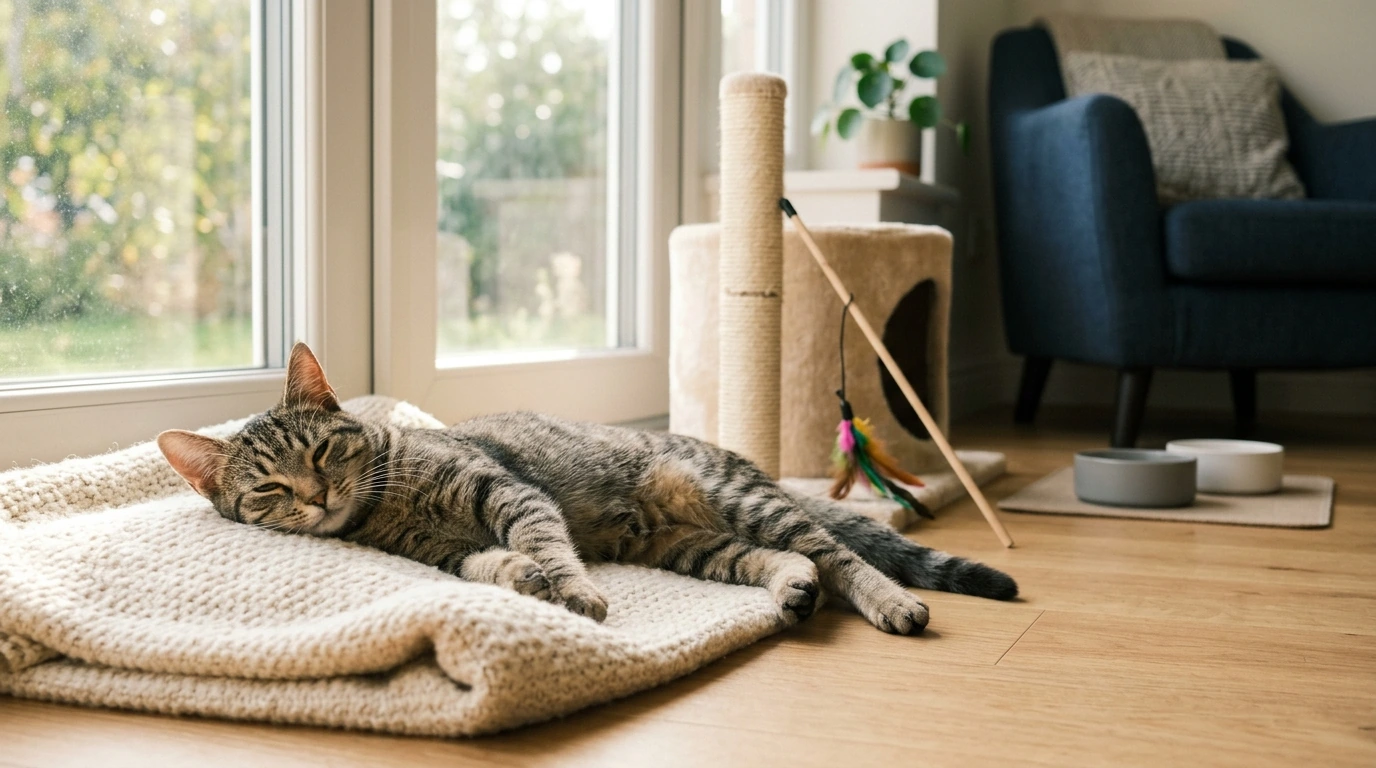
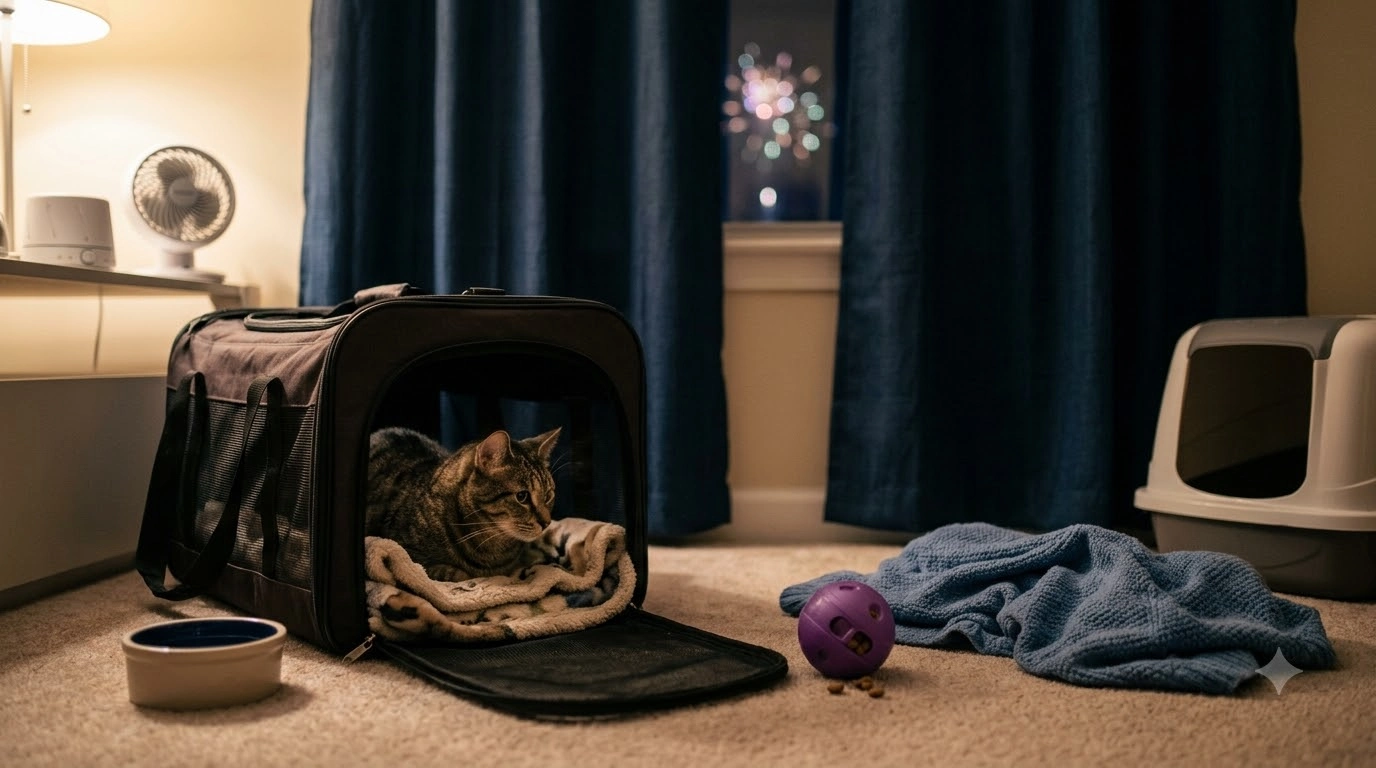
Think of the safe zone as a storm shelter for the nervous system: quieter, darker, and predictable.
| Item | Why it helps | Notes |
|---|---|---|
| White noise / fan / calm music | Masks thunder and reduces startling | Keep volume steady; avoid sudden track changes |
| High-value treats | Builds positive association and supports training | Use small pieces; feed calmly |
| Stuffed toy / lick mat | Licking/chewing can be soothing | Supervise; choose safe sizes |
| Leash + harness / carrier | Prevents bolting and supports quick moves | Check fit ahead of time |
| ID tag + microchip info | Improves recovery if a pet escapes | Confirm contact info is current |
| Towel/blanket | Comfort and a hiding option | Avoid covering face or restricting breathing |
If it helps to have the steps in one place, keep a copy of Thunderstorm Anxiety in Pets: Quick-Action Checklist (instant download) near your safe zone so anyone in the home can follow the same routine.
When thunder hits, your goal is “calm, contained, and consistent.” Aim for a few simple actions you can repeat every time.
For cats who bolt when startled, having a carrier staged in advance can be a safety upgrade. The Transparent Cat Carrier Backpack can help with quick, controlled movement if you need to relocate to a quieter interior space (only if your cat is comfortable with carriers and you’ve practiced ahead of time).
If you’re already building household checklists for pet care routines, pairing storm prep with other predictable care steps can make life easier. For example, Sparkling Ears: Dog Ear Cleaning Checklist (printable guide) is another simple “do it the same way every time” tool.
If you want a ready-to-print version, Thunderstorm Anxiety in Pets: Quick-Action Checklist | Instant Download Guide for Calming Dogs & Cats is designed to be posted right where you’ll use it.
Comfort is fine if your pet seeks it and it helps them settle—keep your voice low and your movements calm. Avoid frantic reassurance or forcing contact; focus on safety, predictability, and a soothing environment.
Many pets detect barometric pressure shifts, distant rumbles, static electricity, or environmental cues that people miss. Treat those early signs as your signal to start the calming routine right away.
Prioritize confinement that prevents injury, such as a secure interior room, crate, or carrier if tolerated, and block exits. Keep dogs leashed for quick potty breaks, and contact a veterinarian if escape attempts are intense or persistent.










Leave a comment