Quarantining new fish means housing them separately long enough to watch for disease, treat problems early, and protect your established aquarium. A simple, consistent routine prevents most “mystery outbreaks” that can wipe out a community tank.
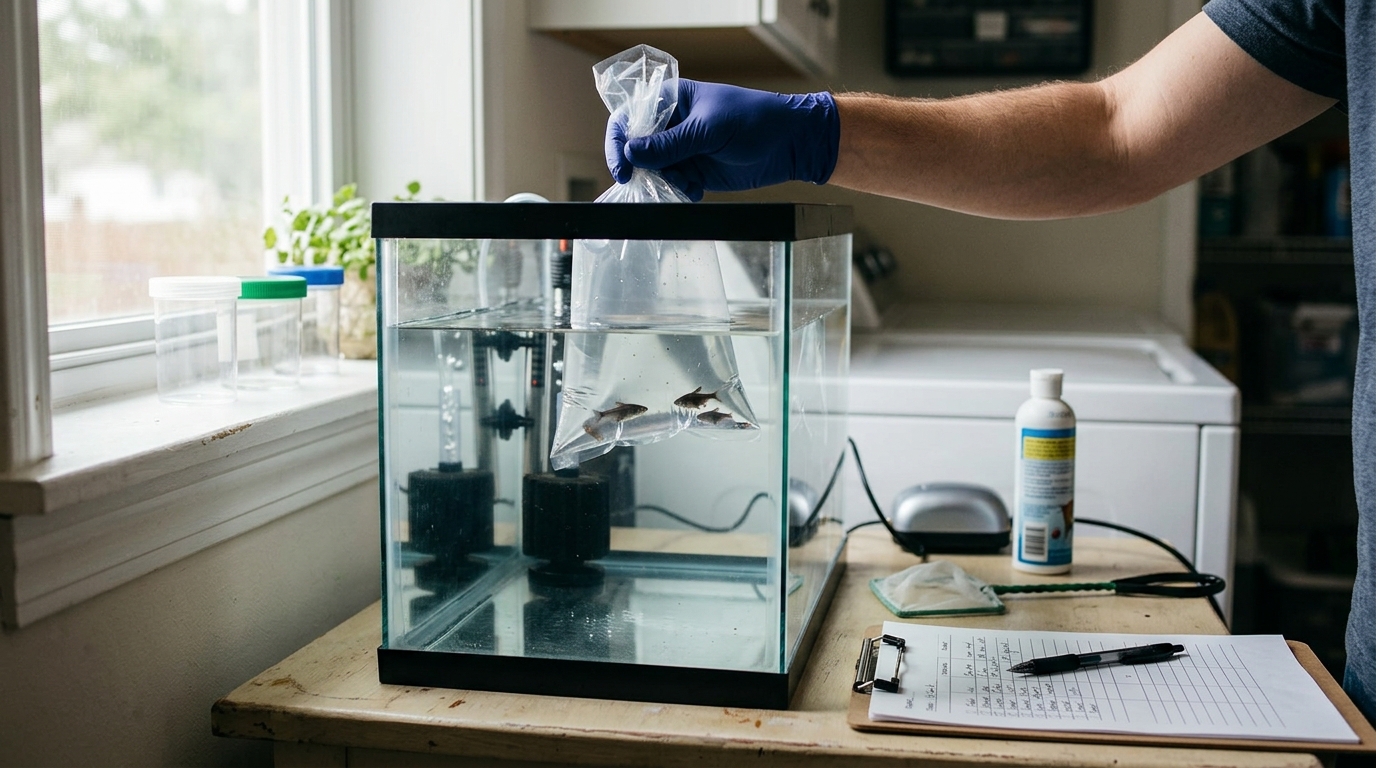
Use a separate tank (often 10–20 gallons) with a heater, lid, and gentle filtration. Skip substrate and décor that’s hard to clean; add a few inert hiding spots like PVC elbows. Most importantly, make sure the filter is cycled (or seeded with established media) so ammonia and nitrite stay at zero.
Float the bag to match temperature, then gradually mix small amounts of quarantine water into the bag over 20–30 minutes before netting the fish into the tank. Keep lights low for the first day and avoid overfeeding.
Plan on a quarantine period of 2–4 weeks. Watch for flashing, clamped fins, heavy breathing, white spots, fuzzy patches, frayed fins, or weight loss. Test ammonia, nitrite, and nitrate regularly; do water changes promptly if parameters drift.
Some aquarists treat prophylactically; others only medicate if symptoms appear. Either way, remove chemical media (like carbon) before dosing, increase aeration, and follow product directions precisely. Stable water quality and low stress often make the biggest difference.
Use separate nets, buckets, and siphons for quarantine. Wash hands and tools between tanks. When quarantine ends, transfer fish with a net—never pour quarantine water into the display aquarium.
For a more detailed walkthrough and equipment checklist, visit the main guide on quarantining new fish.
For Quarantine New Fish: Proper Procedure (2–4 Weeks), the best answer depends on fit, material, care instructions, and how the product will be used day to day.
Most fish do best with 2–4 weeks of quarantine. This window is long enough for many common illnesses to show symptoms and be treated before the fish joins your main tank.









Leave a comment